
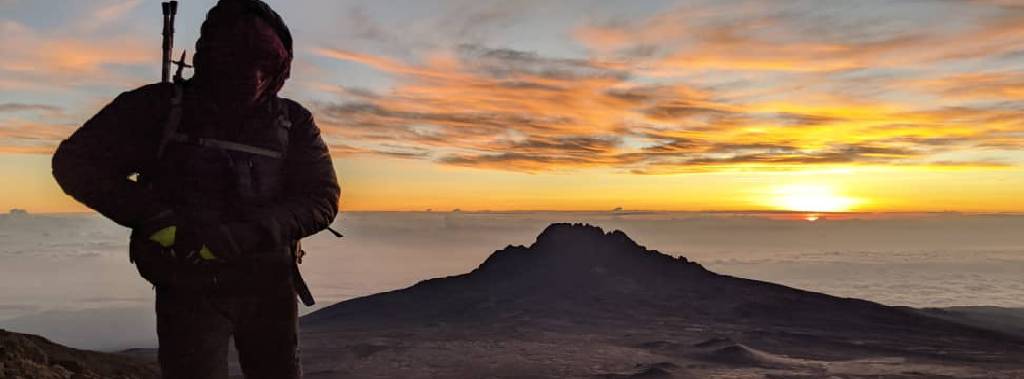
For most first-time climbers, Chiefs Tours’ Head Guide and founder, Adidas Everest, recommends the Lemosho Route. After more than 26 years on Mount Kilimanjaro and 395 ascents, he ranks Lemosho first for beginners, followed by the Northern Circuit, Machame, Rongai and Marangu. His recommendation is based not simply on scenery, but on how beginners acclimatize, respond to the mountain, manage the pace, and handle the demands of the climb.
Choosing a Kilimanjaro route can be confusing when every route seems to have a different claim: the easiest route, the most scenic route, the most popular route, the quietest route, or the route with the highest summit success.
For someone climbing Kilimanjaro for the first time, however, the more useful question is:
Which route gives me the best overall experience and the right conditions to adapt to the mountain?
To answer that question, we spoke with Adidas, Chiefs Tours Head Guide and company founder, who has spent more than 26 years on Kilimanjaro, beginning as a porter in 1994 and becoming a professional mountain guide in 2001. He has completed 395 ascents of Kilimanjaro and has personally guided on all of the mountain’s major routes.
His first choice for most beginners is Lemosho route.
But there is an important qualification: the best route for you depends on more than being a beginner. The number of days available, your preparation, your hiking experience, your expectations, and the way the itinerary approaches acclimatization all matter.
Quick answer: Which Kilimanjaro route is best for beginners?
Based on our Head Guide’s experience, his ranking for first-time climbers is:
| Rank | Kilimanjaro route | Best suited to |
|---|---|---|
| 1 | Lemosho | Most beginners who have enough time for a gradual climb |
| 2 | Northern Circuit | Beginners with more time who want a longer acclimatization profile |
| 3 | Machame | Prepared beginners looking for a more challenging trekking experience |
| 4 | Rongai | Climbers who prefer the northern side of the mountain |
| 5 | Marangu | Climbers who particularly value hut accommodation and understand its trade-offs |
This does not mean that Marangu is impossible for beginners or that every climber should choose Lemosho.
It means that after decades of guiding people on different parts of Kilimanjaro, our guide would rather put most first-time climbers on Lemosho than simply choose a route because it is shorter or marketed as easier.
Why does our head guide recommend Lemosho for beginners?
Our Head Guide’s preference for Lemosho comes from both the character of the route and what he has observed in climbers over many years.
One of the things he values most about Lemosho is the way it introduces climbers to Kilimanjaro.
You don’t simply arrive at the mountain and immediately face its highest elevations.
The route begins through the forest and gradually takes you toward the Shira Plateau before continuing toward the higher sections of the mountain.
For a first-time climber, that progression matters.
Day 1: The mountain starts to feel achievable
Many beginners arrive with a psychological fear of Kilimanjaro.
They wonder:
“Will I really be able to climb this mountain?”
Our guide says that the first day through the forest often helps change that feeling.
The climbing is manageable, the environment is beautiful, and beginners begin to understand that climbing Kilimanjaro is not about racing uphill.
It is about moving steadily.
By the end of the first day, the mountain can start to feel less intimidating.
Day 2: The landscape changes the experience
As climbers move toward the Shira Plateau, the environment opens up dramatically.
The landscape includes features such as:
- Shira Plateau
- Shira Caldera
- Cathedral Peak
- Johnson Point
- Shira Needle
For our Head Guide, this is one of the reasons he prefers Lemosho.
He believes the route gives climbers a particularly impressive perspective of Kilimanjaro’s volcanic landscape and a chance to appreciate the mountain’s different geological environments as the trek progresses.
A beginner who was anxious about the mountain on Day 1 can find themselves genuinely excited about continuing on Day 2.
Lemosho vs Machame: Which is better for a beginner?
Lemosho and Machame are often compared because both eventually approach the summit from the southern side.
Both can be excellent routes.
But our Head Guide prefers Lemosho for beginners.
One reason is the experience of approaching the mountain from the west and spending time around the Shira Plateau.
He feels that Machame offers dramatic scenery, but does not provide the same expansive perspective of Shira plateau that he values on Lemosho.
For a first-time climber, therefore, his choice is: Lemosho first. Machame third.
That doesn’t make Machame a bad route.
It means that if he has the opportunity to choose the itinerary for a beginner, he would generally favour Lemosho when sufficient time is available.
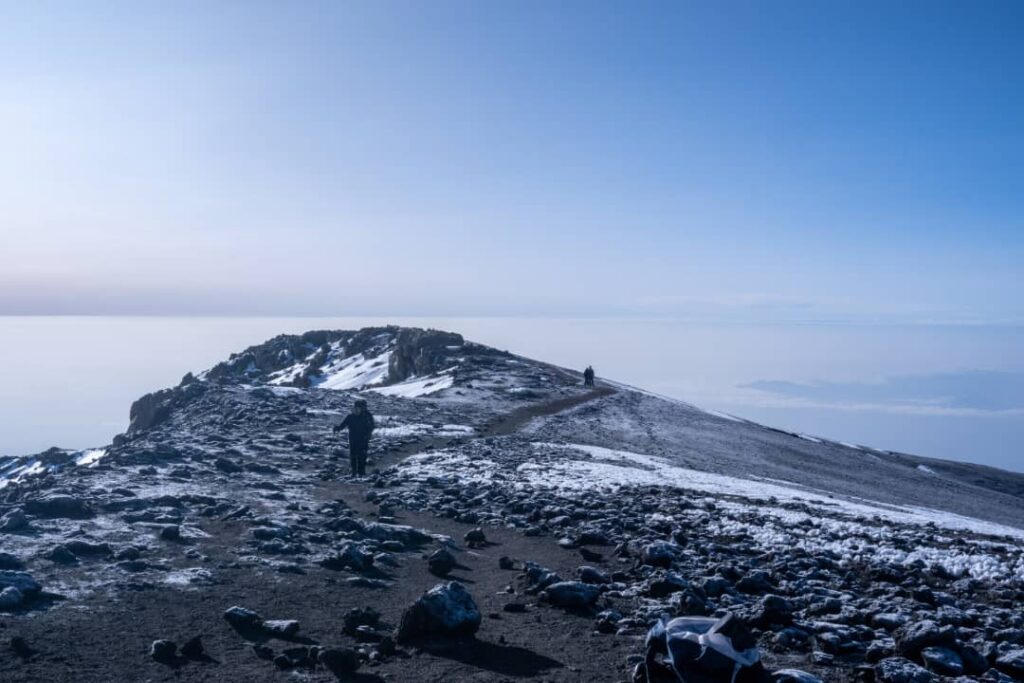
What makes a Kilimanjaro route good for beginners?
Being a beginner does not automatically mean you need the shortest or least demanding route.
In fact, that can be a misleading way to think about Kilimanjaro.
What you need to know is this:
How well does the itinerary allow you to adapt to increasing altitude while managing your energy over several days?
Altitude is one of the major challenges of Kilimanjaro. The CDC notes that the risk of altitude illness is influenced strongly by the altitude at which someone begins sleeping and the rate at which they ascend. Gradual acclimatization is therefore an important part of high-altitude travel.
This is one reason our guide repeatedly emphasizes time and pacing.
A person can be physically fit and still struggle with altitude.
Conversely, someone who is not an elite athlete can have a successful climb when they have a suitable itinerary, prepare properly, move at an appropriate pace and respond well to the altitude.
The 5 Kilimanjaro routes our head guide would consider for beginners
1. Lemosho Route: our head guide’s first choice
Best for: Most first-time climbers who have enough time.
Why our head guide ranks it #1
- Gradual approach to the mountain
- Exceptional scenery around the western side
- Shira Plateau and surrounding volcanic landscapes
- Good opportunity for a longer itinerary
- Suitable for a patient, steady approach to acclimatization
- A route our guide has extensive first-hand experience guiding
For our Head Guide, Lemosho offers the combination he wants to see in a beginner’s climb: time, gradual progression, scenery and an opportunity to adapt to the mountain rather than rush through it.
Is Lemosho the easiest Kilimanjaro route?
Not necessarily.
And that distinction is important.
“Best for beginners” does not mean “requires the least effort.”
Kilimanjaro is still a high-altitude mountain regardless of which route you choose.
Lemosho is our guide’s first choice because of the overall experience and progression of the climb, not because it eliminates the physical demands of reaching Uhuru Peak.
2. Northern Circuit: best when you have more time
Best for: Beginners who can spend more days on the mountain.
Our Head Guide ranks the Northern Circuit second.
The main limitation for many travellers is simply time.
If you have enough time for a longer Kilimanjaro itinerary, the Northern Circuit deserves serious consideration.
For high-altitude trekking, allowing the body more time to adjust can be valuable. The CDC’s high-altitude guidance similarly emphasizes gradual ascent and additional acclimatization time where appropriate.
For a beginner whose priority is giving themselves plenty of time on the mountain, our guide would put the Northern Circuit very high on the list.
3. Machame Route: a strong option for prepared beginners
Best for: First-time climbers who are reasonably prepared and want a more challenging trekking experience.
Machame is one of Kilimanjaro’s best-known routes and can certainly be climbed successfully by beginners.
But our guide ranks it behind Lemosho and the Northern Circuit.
Why?
Because when he thinks specifically about a first-time climber, he prefers the overall characteristics of Lemosho and, when time allows, the longer Northern Circuit.
Machame should therefore not be dismissed.
Instead, think of it this way:
A prepared beginner can climb Machame, but our guide would normally choose Lemosho first.
4. Rongai Route
Best for: Climbers who prefer the northern side of Kilimanjaro and want a different approach to the mountain.
Rongai is fourth in our guide’s beginner ranking.
Its position doesn’t mean it is unsuitable for first-time climbers.
It means that, based on his experience across the mountain, he would generally select Lemosho, Northern Circuit or Machame ahead of it when helping a beginner choose.
Your personal priorities can change that decision.
5. Marangu Route
Best for: Climbers who particularly value hut accommodation and understand the route’s trade-offs.
Marangu is often called the “Coca-Cola Route” and is frequently marketed as the easiest Kilimanjaro route.
But this is where our guide believes beginners need to look beyond the label.
The fact that a route has hut accommodation does not automatically mean it is the best route for acclimatization or the best choice for every first-time climber.
Our guide ranks Marangu fifth for beginners.
One of his observations concerns the conditions climbers can experience during the final stages of the climb, particularly around the summit approach.
He has found the eastern side can be exposed to strong winds, while climbers approaching the summit from the Barafu area on routes such as Lemosho and Machame can experience different exposure.
This is one reason he doesn’t simply equate “shorter” or “hut accommodation” with “better for beginners.“
The “best” Kilimanjaro route depends on you
There is no route that is perfect for every climber.
Before choosing, consider:
How many days do you have?
If you can afford additional days, don’t assume they are unnecessary.
How much hiking experience do you have?
A first-time mountain climber may need a different approach from someone with extensive trekking experience.
What matters most to you?
Is it:
- acclimatization?
- scenery?
- solitude?
- accommodation?
- budget?
- the challenge?
- having more time on the mountain?
What does your guide recommend?
This may be the most important question.
A route recommendation from someone who has actually guided you is more useful than choosing solely from a list of route descriptions.
Beginner’s Kilimanjaro route decision guide
| If your priority is… | Consider |
|---|---|
| Best overall choice according to our Head Guide | Lemosho |
| More time for the climb | Northern Circuit |
| A challenging, popular trekking route | Machame |
| Northern approach | Rongai |
| Hut accommodation | Marangu |
| Shortest possible itinerary | Think carefully before choosing based on this alone |
Final verdict: Lemosho is our first choice for most beginners
If you’ve never climbed Kilimanjaro before, you don’t necessarily need the route with the fewest days, the lowest price or the reputation for being “easy.”
You need an itinerary that respects the mountain.
After more than two decades of guiding and 395 ascents, our Head Guide’s first choice for most beginners is Lemosho.
The Northern Circuit comes next if you have enough time, followed by Machame, Rongai and Marangu.
But perhaps the most important lesson from his experience isn’t actually about a route.
It is about how you climb it.
Kilimanjaro rewards patience.
As our head guide puts it:
“Inch by inch is a cinch, yard by yard is hard.”
Take the mountain one step at a time.
Walk pole pole (slowly).
Give yourself enough time to acclimatize.
Choose an experienced mountain operator.
And remember that the objective isn’t simply to reach the highest point in Africa as quickly as possible.
It is to climb Kilimanjaro safely, enjoy the journey and return home with a summit story you are proud to tell.
Want help choosing your Kilimanjaro route?
Not sure whether Lemosho, Northern Circuit, Machame, Rongai or Marangu is right for you?
Let’s help you choose the best Kilimanjaro route for you. Contact Us Here
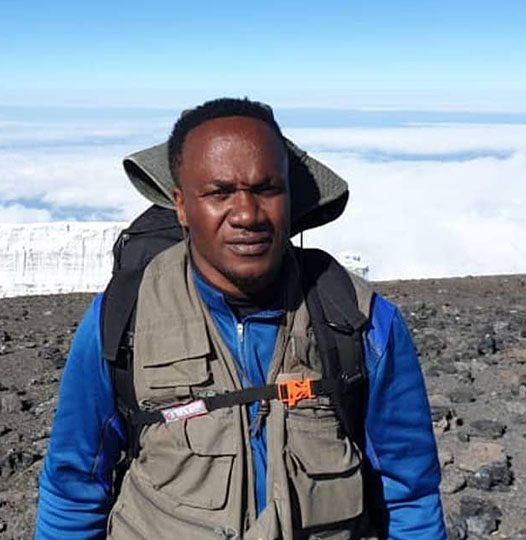 About the Guide Behind This Advice
Chiefs Tours Head Guide – Adidas Everest
26+ years of Kilimanjaro experience | Guiding since 2001 | Started as a porter in 1994 | 395 ascents | Experience across all major Kilimanjaro routes
The route recommendations in this article are based on his first-hand experience guiding climbers on Mount Kilimanjaro.
Frequently Asked Questions
Which Kilimanjaro route is best for beginners?
Based on the experience of the Chiefs Tours Head Guide, Lemosho is his first choice for most beginners. He ranks the Northern Circuit second when sufficient time is available, followed by Machame, Rongai and Marangu.
Is Lemosho suitable for first-time climbers?
Yes. Lemosho can be an excellent choice for first-time climbers, particularly when the itinerary allows enough time for gradual acclimatization. Chiefs Tours’ Head Guide specifically recommends Lemosho based on his experience guiding climbers across Kilimanjaro.
Is Machame harder than Lemosho?
The two routes have different characteristics, and difficulty depends partly on the itinerary and individual climber. Chiefs Tours’ Head Guide ranks Machame third for beginners and prefers Lemosho because of the overall progression and western approach.
Is Marangu the easiest Kilimanjaro route?
Marangu is often marketed as the easiest route, partly because it uses mountain huts rather than tents. However, “easiest” does not necessarily mean “best for beginners.” Chiefs Tours’ Head Guide ranks Marangu fifth for first-time climbers.
How many days should a beginner spend climbing Kilimanjaro?
There isn’t one number that works for everyone, but beginners should be cautious about choosing an itinerary purely because it is short. Acclimatization is an important consideration at high altitude, and gradual ascent helps the body adapt.
Can an unfit person climb Kilimanjaro?
Kilimanjaro does not require you to be an elite athlete, but you should prepare physically and understand that altitude affects people differently. Physical fitness alone does not eliminate the risk of altitude illness.
What is the most important thing for a beginner climbing Kilimanjaro?
According to our Head Guide, patience and pacing are crucial. His guiding philosophy is summed up by: “Inch by inch is a cinch, yard by yard is hard.” Beginners should also allow sufficient time, listen to their guides and communicate honestly about how they are feeling.
Which Kilimanjaro route has the highest success rate?
Be careful with generalized route-by-route success-rate claims. Success rates vary depending on the operator, itinerary length, group characteristics and how “success” is measured.